
The 10 Most Commonly Damaged Items When Moving House in New Zealand and Australia
Moving house is one of life’s bigger undertakings, and damage to your belongings is one of the most common and frustrating things that can go wrong. The good news is that most damage is preventable. Choosing a quality removals company makes a huge difference, but knowing how to protect your belongings in the first place helps too. Here are the ten items most commonly damaged when moving house in New Zealand or to Australia, and what you can do about each one.
1. Glassware and China
Glasses, plates, and crockery are the most frequently damaged items in any house move. Each piece needs to be individually wrapped in packing paper and cushioned so nothing touches anything else in the box. Pad the bottom, sides, and top of the box generously, and never overload it.
2. Framed Pictures and Mirrors
Glass fronts and sharp frame edges make these particularly vulnerable. Pool noodles split lengthways work brilliantly around frame edges, and a sheet of stiff cardboard taped over the glass face adds another layer of protection. Always store frames upright, never flat.
3. Furniture
Sofas, dining tables, and bedroom furniture all cop damage from poor handling. Wrap pieces in furniture blankets first, then add a layer of good-quality cardboard for extra protection. Equally important: protect your walls, floors, and stair banisters during the move. Gouges and scrapes from an unprotected sofa corner are expensive to fix.
4. Lampshades
Easily crushed and awkward to pack, lampshades are a moving day casualty far more often than people expect. Pack them Russian doll style: individually wrapped in packing paper, then nested from largest to smallest inside a well-padded box.
5. Electronics
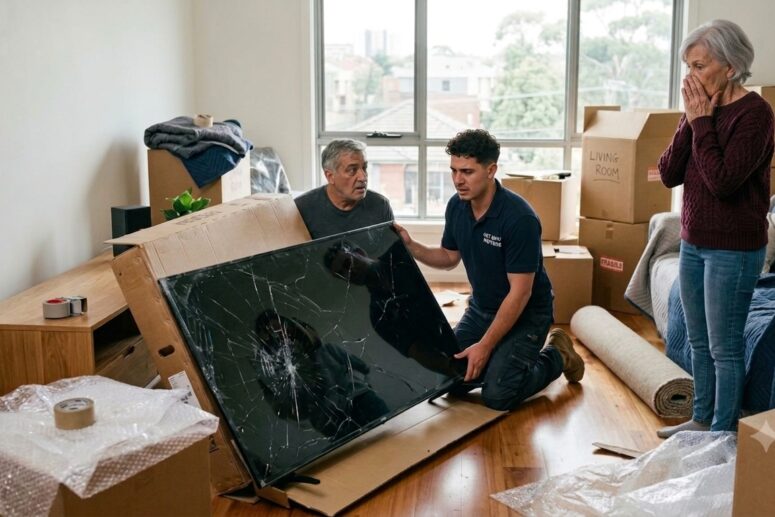
TVs, laptops, and stereos should ideally go back into their original packaging. If that is not possible, wrap each item thoroughly in bubble wrap, pad the box with packing peanuts, and make sure nothing can shift in transit. Photograph all cable connections before you unplug anything. You will thank yourself later.
6. Bottles
Wine, spirits, and other bottles need proper bottle boxes with internal dividers. These stop bottles moving against each other in transit. Your local supermarket or bottle store may have suitable boxes available for free if you ask.
7. Sporting Equipment
Bikes, golf clubs, racquets, and similar gear should go into their normal protective covers first, then be wrapped in bubble wrap for the move. Do not rely on the cover alone. They are designed for storage, not the bumps of a house move.
8. Musical Instruments
Most instruments should travel in their hard cases, with the case itself wrapped in furniture blankets or bubble wrap for added protection. Pianos are the exception. These require specialist handling and should only be moved by an experienced removals team.
9. Plants
Plants get damaged more often than people realise, usually because they have not been prepared properly. Transfer smaller plants to plastic pots before the move to reduce breakage risk. For larger pots, pad between them so they cannot knock together. Large established plants are often best moved by taking cuttings rather than attempting to shift the whole plant.
10. You
The most important thing in any move is you. Moving is physically demanding, and injuries from lifting incorrectly or rushing are more common than people expect. If you have any doubt about your ability to safely manage a move, hire professionals to do it for you.
How to Pack Boxes Properly
Good packing is the foundation of a damage-free move. Follow these basics every time:
- Use small boxes for heavy items, larger boxes for light items
- Tape all seams and the bottom of every box thoroughly
- Line the bottom of the box with padding before adding contents
- Pack heaviest items first, lightest on top
- Fill every gap with clothing, towels, or packing paper. Nothing should move inside the box
- Pad the top before sealing
- Label every box clearly, including FRAGILE and THIS WAY UP where needed
Why Choosing the Right Removals Company Matters
The single biggest factor in whether your belongings arrive safely is the quality of the removals company you choose. A professional, experienced team will have the right equipment, the right packing materials, and the skills to handle your goods carefully. They will also carry proper insurance, so if the unexpected does happen, you are covered.
Be cautious of cheap man-and-van operators who may carry no insurance, have no formal claims process, and lack the training to handle furniture and fragile items safely. It is also worth checking whether your home and contents insurance covers goods in transit. Many policies do not, or carry exclusions for items you have packed yourself.
Moving House in New Zealand or moving to Australia? Talk to Container Relocations.
Container Relocations has been helping New Zealanders move house safely and smoothly since 2009. We operate nationwide, including moves across Cook Strait, the Tasman Sea and beyond, and our experienced team treats your belongings with the same care we would our own. Get in touch today for a free moving quote at team@containerrelocations.co.nz. We’re always happy to help you!